

Prince Sattam bin Abdulaziz University continues to strengthen an integrated university ecosystem aimed at attracting and empowering talent, enhancing communication, improving the beneficiary experience, and expanding its societal impact. This approach is built on key pillars that support the University’s journey toward academic and institutional excellence, in alignment with the objectives of Saudi Vision 2030.
The University considers attracting national talent and specialized expertise among the key enablers for achieving its strategic objectives. It does so by providing academic, administrative, and technical opportunities and attracting experienced professionals capable of contributing to performance improvement and enhancing the quality of outcomes. The University’s approach does not stop at recruitment; it also places strong emphasis on onboarding new employees, familiarizing them with regulations, policies, and services, and empowering them to perform their roles efficiently from the outset of their journey at the University.
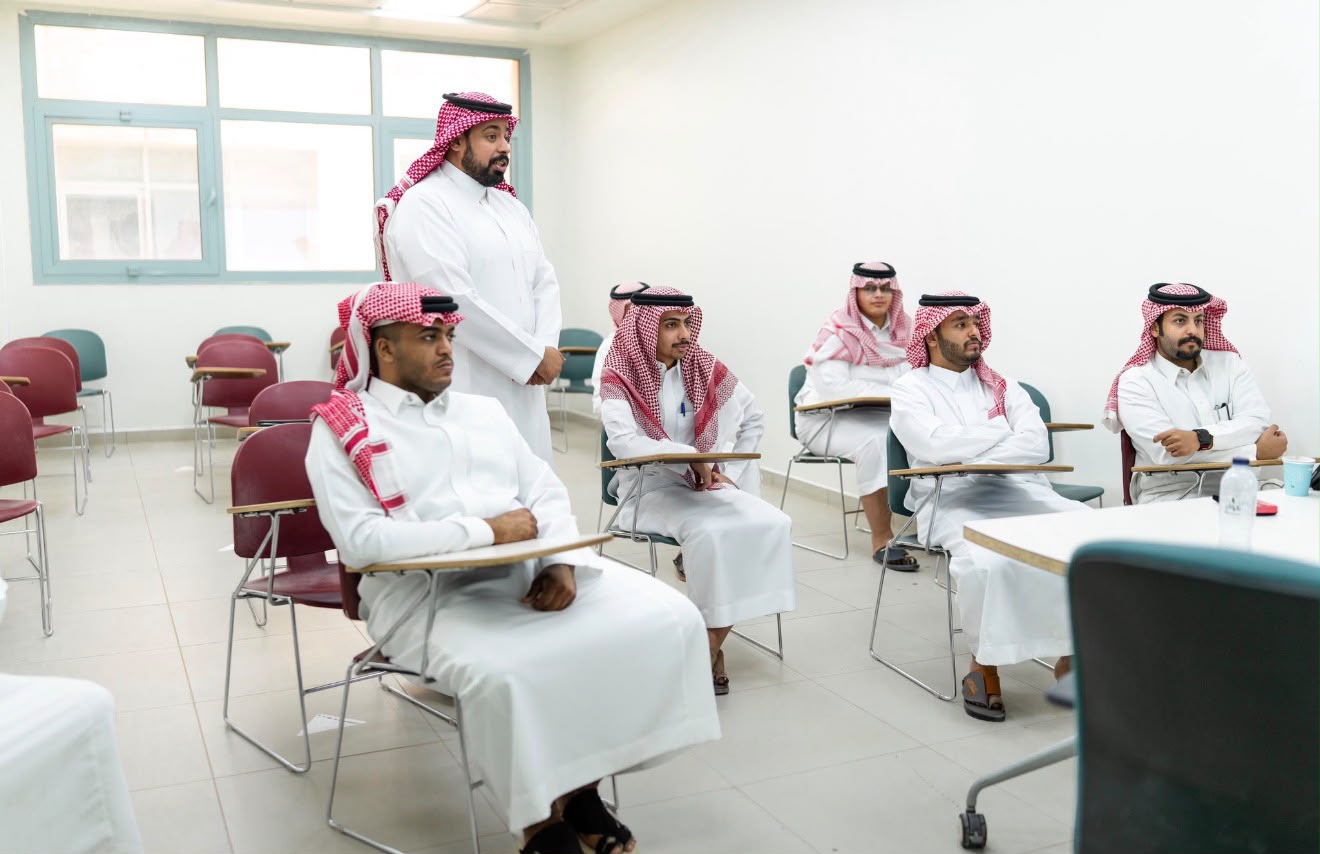
In this context, the University’s orientation programs for newly appointed faculty members stand out. These programs include meetings with academic leaders, introductions to university regulations and services, discussions of academic matters, and an emphasis on the importance of scientific research, community service, and the development of teaching methods. The University has previously implemented an orientation program benefiting more than 90 faculty members across health, humanities, and applied disciplines. This demonstrates that investing in talent does not end with appointment; rather, it marks the beginning of an integrated journey of orientation, development, and empowerment.
On the administrative side, investment in talent extends across the various stages of the student journey within the University—from admission and registration, through academic and electronic services, to graduation and beyond. The University seeks to enhance operational efficiency and provide a motivating work environment based on continuous development and the attraction of expertise across diverse fields, thereby improving service quality, accelerating processes, and ensuring greater clarity of procedures.
According to 2025 indicators, the University implemented 236 community programs benefiting 22,440 individuals, in addition to providing 47 healthcare services benefiting 2,495 people. In the field of volunteering, the number of volunteers exceeded 2,400, while the number of volunteer opportunities reached 229, with more than 35,000 volunteer hours recorded. These figures reflect a shift in the concept of community service from an activity parallel to university operations into an institutional ecosystem that leverages the expertise of faculty members, employees, and students and transforms it into initiatives and programs with a direct impact on society.
Attracting and developing talent is also part of a broader quality and academic accreditation ecosystem. The University has obtained full institutional accreditation for the period from 2019 to the present, in addition to several national and international program accreditations. The University’s strategic direction emphasizes the application of quality and accreditation standards across academic and administrative fields, while strengthening scientific and cultural communication with local and international institutions, opening broader avenues for knowledge and expertise exchange.
Indicators published in the University’s Open Data Library highlight the importance of annual reports in monitoring institutional performance across areas including faculty members, students, scholarships, training, community service, and administrative, technical, and financial affairs. These reports provide a foundation for developing more accurate indicators to measure the impact of talent attraction, development, and engagement policies year after year.
Today, Prince Sattam bin Abdulaziz University is placing its confidence in its talent by building a high-quality, more efficient academic and administrative workforce that is closely aligned with the needs of society and the labor market. Through this ongoing effort, the University seeks to transform knowledge, expertise, and human resources into sustainable impact, strengthening its position and role in the Kingdom’s national development journey.
News Images